Starting solids can feel like a milestone and a mystery. That’s why getting clear on what stage 1 baby foods are and how to approach them is so helpful. You’ve just gotten into the rhythm of feeding and sleeping. Now you’re steaming squash and second-guessing whether peaches are too acidic.
I felt that too.
So let’s break this down in a way that’s useful, calming, and parent-tested.
This article is for general information and does not replace medical advice. Always follow your pediatrician’s guidance, especially for premature babies, reflux concerns, or known allergy risk.
When Should Babies Start Stage 1 Foods?
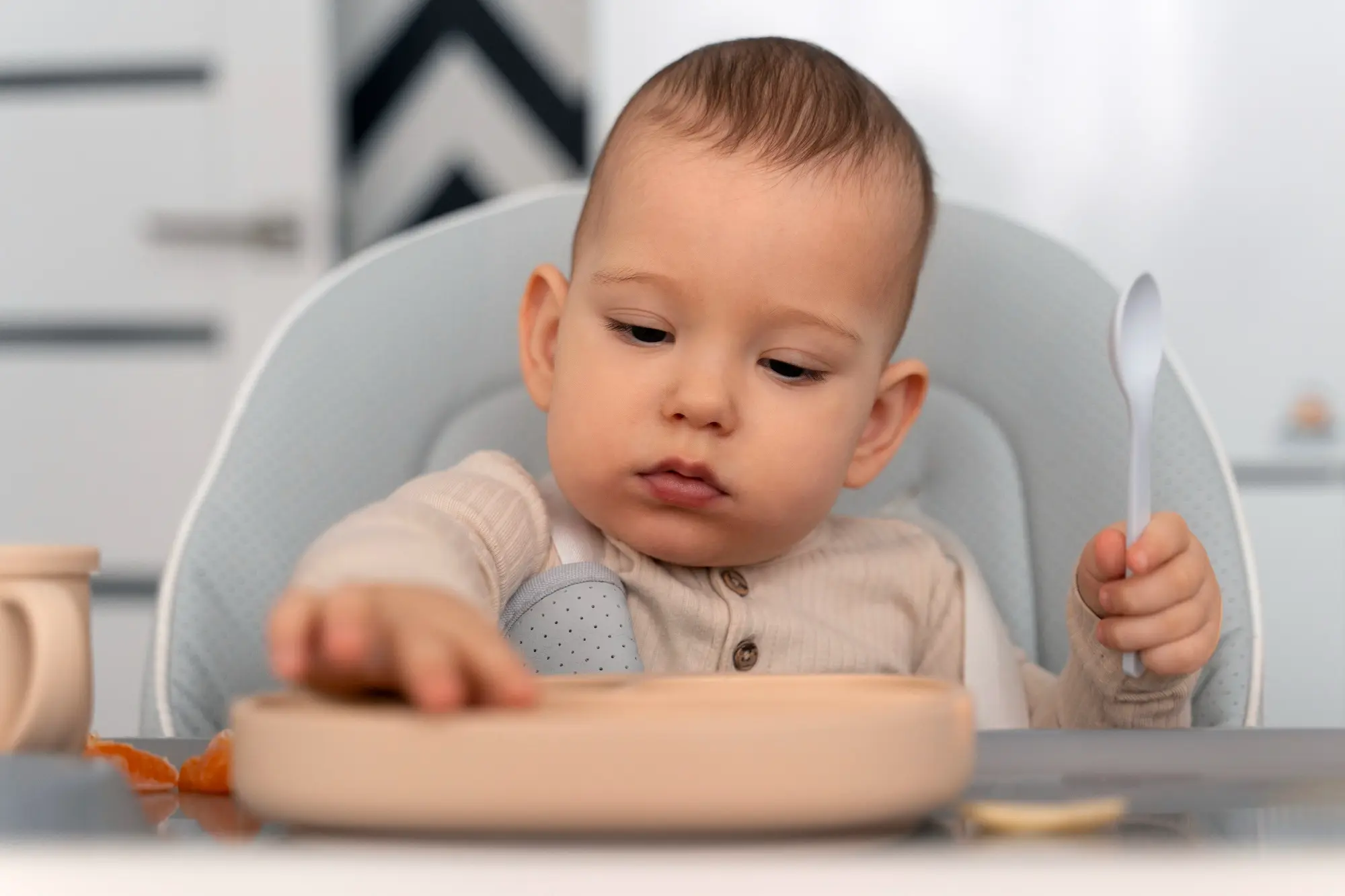
Most babies are ready to start Stage 1 foods at about 6 months, once they show clear readiness signs. Some may be ready a little earlier, but age alone is not the green light.
Signs Your Baby Is Ready
- They can sit up with some support
- Their head and neck stay steady during feeding
- They reach for your plate or stare while you eat
- Their tongue-thrust reflex has started to fade
Some babies show interest early. Some don’t until 6 months or even a little later. It’s normal.
Still, always check with your pediatrician before starting solids. The AAP technical report on breastfeeding and the use of human milk supports exclusive breastfeeding for about 6 months. Breast milk or formula should stay the main source of nutrition as you begin complementary foods. Starting solids before a baby shows readiness can increase choking risk and may crowd out milk feeds.
What Exactly Are Stage 1 Baby Foods?
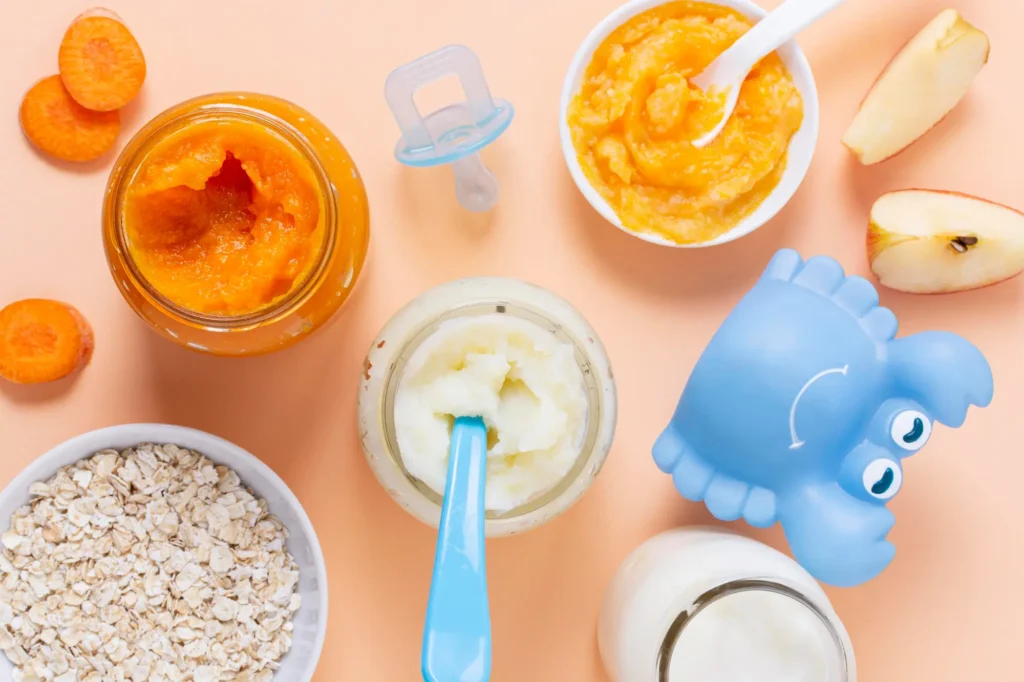
When starting with stage 1 baby foods, focus on options that are smooth, easy to digest, and one-ingredient only.
Think single-ingredient foods with a soft, smooth texture. This stage is about introducing one food at a time so your baby can learn new flavors. It also makes it easier to spot a reaction.
They should be:
- Easy to digest
- Not too sweet or salty
- Served in small amounts, usually just a few spoonfuls at first
Start with 1 to 2 teaspoons once a day, keep textures smooth, and follow hunger and fullness cues.
Texture-wise, it’s often compared to thin applesauce. You can thin purees further with breast milk, formula, or a bit of water depending on what your baby needs.
Why Organic Matters for Stage 1 Foods
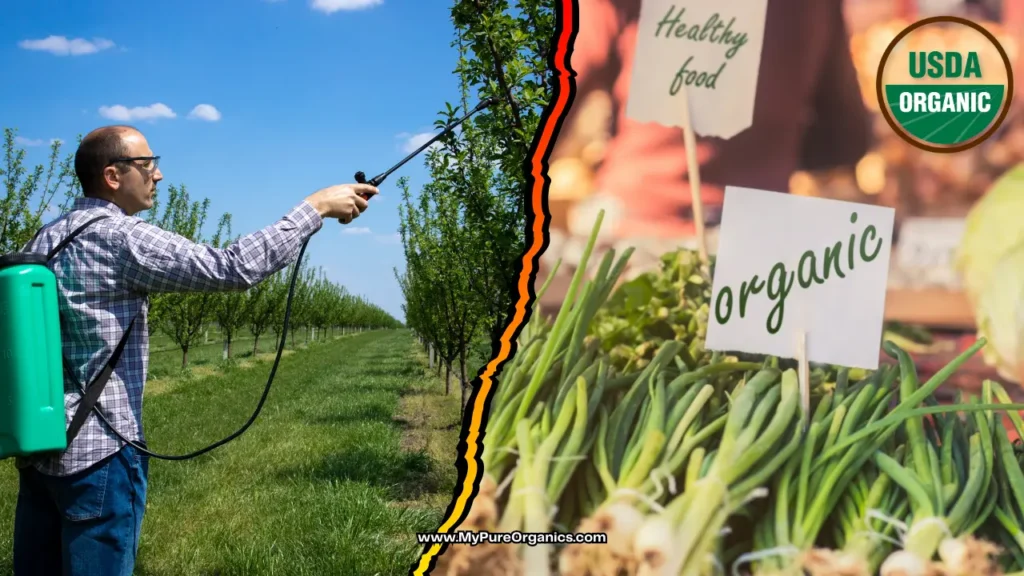
Baby food is personal. And when it comes to picking between organic and non-organic, many parents ask, “Is it really worth it?”
Here’s what we know:
Babies eat more food per pound of body weight than adults. That means even tiny amounts of chemicals or contaminants can have a larger effect on their small systems.
Monitoring programs repeatedly find pesticide residues on many conventionally grown fruits and vegetables, including produce that ends up in baby foods. In contrast, USDA organic standards restrict most synthetic pesticides and prohibit GMOs, so many parents use organic as a practical way to reduce exposure. They’re also processed without artificial preservatives or colorings.
A small diet intervention study on urinary pesticide levels followed U.S. families (including children) and compared urine samples during a conventional diet phase versus an organic diet phase. After several days eating organic foods, average urinary levels of glyphosate and its main metabolite (AMPA) dropped sharply. This does not prove organic is required for every baby, but it does show food choices can change measurable exposure quickly.
For a baby whose brain and organs are still developing, that kind of reduction matters.
A 2024 systematic review in World Journal of Clinical Pediatrics discusses organic versus conventional infant formula and flags antibiotic-use policies as one possible difference between production standards. Direct infant outcome comparisons are still limited, so it’s best read as supporting context rather than a stand-alone conclusion.
Another systematic review comparing pesticide residues in organic vs conventional foods found that organic foods, including baby foods, generally show lower pesticide-residue levels. That makes a real difference when you’re feeding a body that’s still growing and developing.
What Does the USDA Organic Label Actually Mean?
The term “organic” isn’t just marketing fluff. When you see a USDA Organic seal, here’s what it guarantees:
- No synthetic pesticides or chemical fertilizers
- No growth hormones or routine antibiotics
- No GMOs
- No artificial colors, preservatives, or flavors
USDA Organic does not mean “pesticide-free.” It means farming follows a regulated standard that restricts most synthetic pesticides and prohibits genetic engineering.
For the exact labeling rules (for example, what “100% organic” means vs “organic”), see the USDA National Organic Program labeling requirements.
The USDA requires organic baby foods to be produced without GMOs, artificial preservatives, or synthetic pesticides. Products labeled “100% organic” must meet strict federal standards.
If you’re new to the world of organic baby food and want a full breakdown of what’s safe, what to look for, and how to get started, check out our organic baby food basics and label-safety guide.
5 Organic Stage 1 Baby Food Recipes (Quick & Safe)
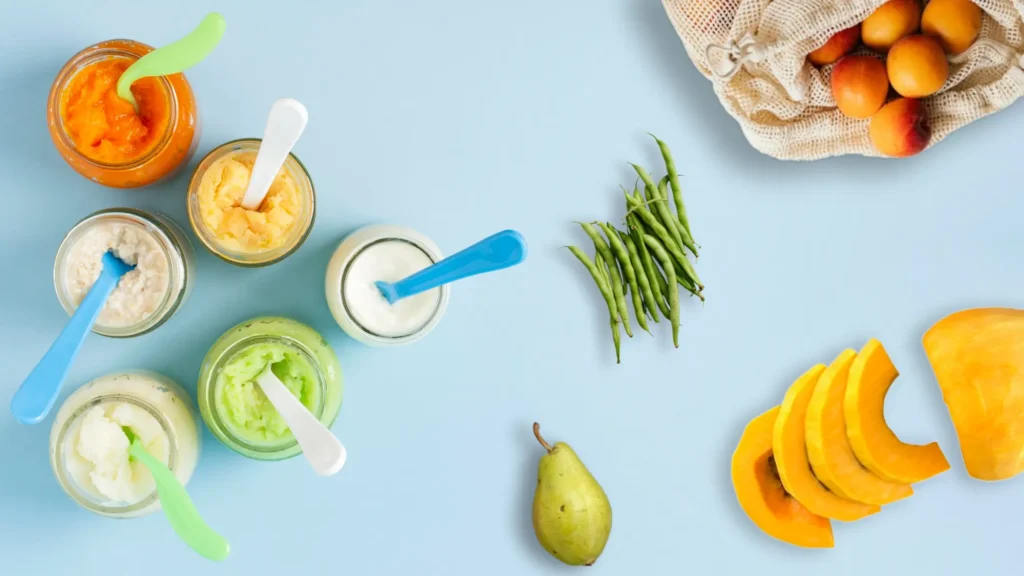
These are gentle, nutrient-rich, and beginner-safe. You don’t need fancy gear or hours of prep. Most take less than 15 minutes to make.
🥣 Butternut Squash Purée
This one is a favorite because it’s rich in vitamin A, naturally sweet, and creamy.
- Peel and cube squash
- Steam until soft (about 10–12 minutes)
- Blend until smooth, add breast milk if needed
- Freeze extras in silicone trays
🍐 Pear + Quinoa Purée
Great for a gentle start and easy digestion.
- Peel and chop a ripe pear
- Steam until very soft
- Blend until smooth (thin with breast milk/formula if needed)
Optional (6+ months): If your baby has already tolerated pear well, you can blend in 1–2 teaspoons of fully cooked quinoa for a thicker texture. Keep it as a separate “second step” so you’re still introducing one new ingredient at a time.
🎃 Pumpkin Baby Purée
Naturally sweet and high in beta-carotene.
- Use fresh pumpkin (peeled and steamed) or canned organic pumpkin puree
- Blend with a splash of formula or breast milk
- No added sugar and no pie spices. Keep it as plain pumpkin.
🟢 Green Pea Purée
A great source of plant-based protein and iron.
- Steam fresh or frozen peas until soft
- Blend and strain if needed
- Peas are slightly textured, so make sure to get a smooth consistency
🍑 Peach Purée
Perfect for summer babies.
- Peel and slice ripe peaches
- Steam briefly to soften (3–4 minutes)
- Blend until smooth
- Offers vitamin C and a naturally sweet flavor babies tend to love
When your baby is ready to move beyond single-ingredient purees, these easy homemade baby food ideas for 6–9 months can help you plan simple combos.
Tools That Make Homemade Baby Food Easier
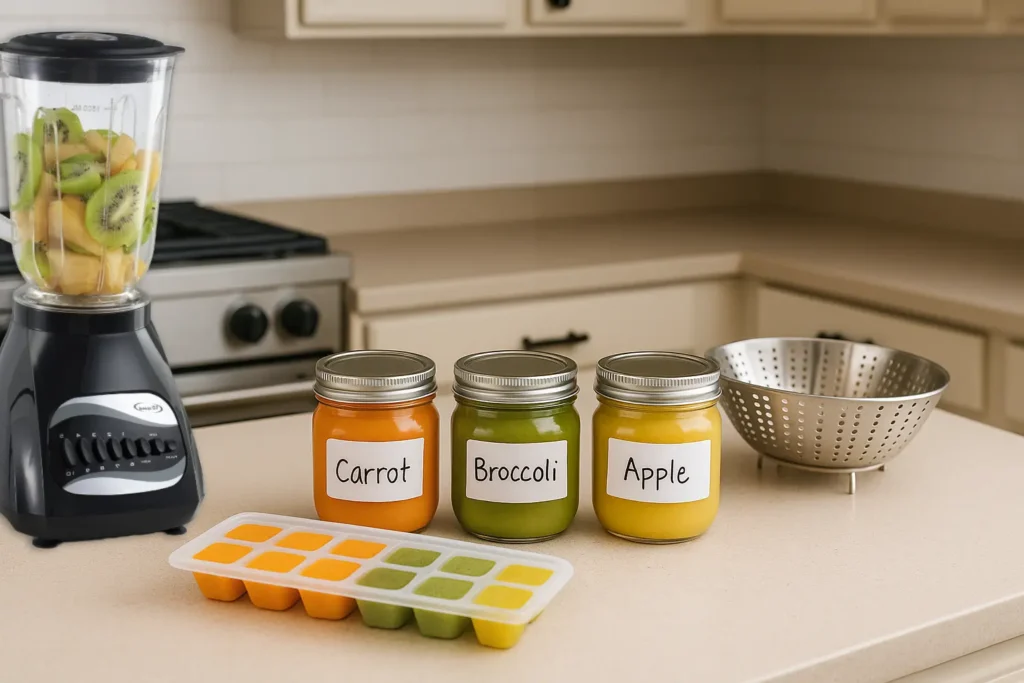
You don’t need a fancy baby food maker.
Here’s what worked for me:
- A simple blender or food processor
- Ice cube trays (silicone ones pop out easier)
- Glass jars or containers with dates labeled
- A steamer basket or pot with a lid
My Batch-Cooking Flow
- Pick 2–3 ingredients for the week
- Steam, blend, and freeze
- Thaw overnight in fridge or warm gently
Batch-prepping a few stage 1 baby foods each week saves time and keeps your freezer stocked with safe, simple meals.
For a full breakdown of the tools, timing, and freezing method I use, you can scroll to the homemade prep section inside this guide on feeding babies solids. It’s packed with realistic tips that won’t overwhelm you.
What to Avoid in Stage 1 Feeding
Even healthy foods can be risky if introduced too early.
Here’s what to skip:
- Honey (not safe under 12 months due to botulism risk)
- Salt or added sugar (kidneys aren’t ready)
- Whole nuts, raw veggies, grapes (choking hazards)
- Cow’s milk (okay in recipes, not as a drink before 12 months)
Also avoid:
- “Fruit blends” that sneak in added sugar
- Juices labeled as “baby” but are basically sugar water
Questions Parents Ask About Stage 1 Foods
Is Organic a Must for Stage 1 Baby Foods?
No. But if you’re picking and choosing, start with fruits and vegetables that tend to have higher pesticide residue.
The EFSA pesticide-residue monitoring update summarizes how often pesticide residues are found in commonly eaten foods across Europe. If you are choosing where organic makes the most practical sense for early feeding, it is reasonable to prioritize frequently consumed fruits such as grapes and strawberries, since these are among the foods routinely covered in residue monitoring. If buying everything organic is not realistic, focusing on a small priority list can still reduce exposure without making feeding feel complicated.
What if my baby rejects the puree?
Totally normal. It can take 8–10 tries for babies to accept a new taste. Don’t give up — just try again later.
Can I mix foods this early?
Once you’ve tested single foods with no reaction, yes. You can mix them slowly. For example, mix peas and pears once both are tested individually.
Final Thoughts: You Don’t Have to Be Perfect
Homemade baby food is about intention, not perfection.
Start simple. Stick to whole foods. Buy organic when it matters. And trust that every little choice adds up to something bigger.
Whether you make all your food at home or just dabble in squash purée on Sundays, you’re doing great.
Each spoonful is one step closer to a healthy eater.