
Watching your baby grow brings so many wonderful moments. One of the biggest steps in that first year is the move from a strictly liquid diet to solid foods. This change brings new flavors, new textures, and a lot of fun to your kitchen table. But knowing exactly when to start and which baby food recipes to prepare can feel very overwhelming for many parents. You might wonder what is safe, what is healthy, and what your baby will actually enjoy eating.
The rules for infant feeding rely on solid medical science. You need to pay close attention to specific developmental signs, changing nutritional needs, and the overall safety of your ingredients. Choosing clean, organic options right from the beginning helps protect a growing body from harsh agricultural chemicals. This guide explains the exact steps you need to take, the physical signs to watch for, and the best simple recipes to prepare at home.
Knowing When Your Baby is Ready for Solid Food
Current medical guidelines offer clear timing for starting solid foods. The Centers for Disease Control and Prevention’s infant nutrition guidelines state that infants should begin eating foods other than breast milk or formula at around six months of age.
Giving a baby solid food before four months carries health risks. Their digestive system cannot handle complex foods yet. Clinical research evaluating infant feeding timelines and weight gain risks shows that early introduction increases the chance of childhood obesity. Waiting until the six-month mark protects their long-term health.
Every infant develops at a different pace. Look for these clear physical signs before offering purees:
- Sitting up alone or with very little support.
- Showing strong, steady control over the head and neck.
- Opening the mouth willingly when food is offered.
- Swallowing food instead of pushing it back out.
- Grasping small objects and bringing them to the mouth.
Always double-check with your pediatrician before changing your baby’s diet.
Why Choosing Organic Ingredients Matters So Much
A baby has a rapidly developing biological system. They are highly sensitive to chemicals in their environment.
Conventional farming uses synthetic sprays to control bugs and weeds. These chemicals leave small traces on grocery store produce. A major clinical analysis assessing infant vulnerability to agricultural chemicals tested hundreds of baby food samples. The researchers found frequent pesticide traces, making monitoring necessary to protect infant health.
Glyphosate is a common weed killer found in standard grain products. Changing your diet makes a fast, measurable difference. Another published study demonstrated how quickly adopting an organic diet lowers systemic glyphosate exposure in both children and adults. In some cases, levels dropped by over 70 percent in less than a week.
Choosing organic produce keeps these chemicals out of your kitchen. For high-risk items like apples and spinach, consult the Environmental Working Group’s guide to heavily sprayed produce. For fruits with thick skins like avocados, prioritizing crops with naturally lower pesticide residue offers safe, budget-friendly options. To further avoid harmful additives and maximize nutrition, you can explore the health advantages of preparing infant meals from scratch.
Safe Food Preparation and Hygiene
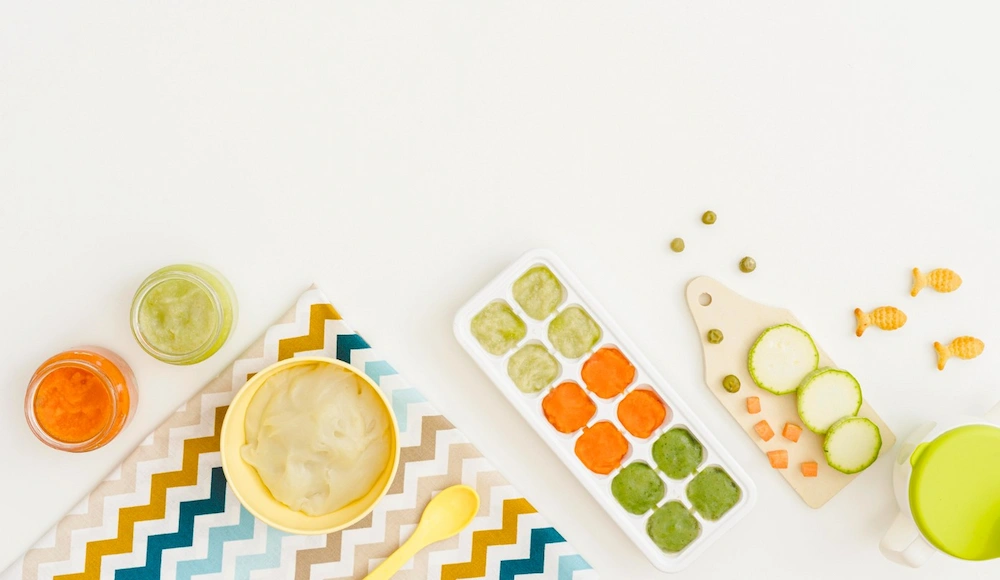
You do not need expensive equipment to prepare these healthy baby food recipes. A basic blender or food processor works perfectly. You only need silicone ice cube trays for easy portion control and small glass jars for storage.
Safety comes first. Wash your hands and the baby’s hands before mealtime. Keep all cutting boards clean. Guidelines for safe solid food administration during emergencies remind parents to prepare foods that dissolve easily with saliva to prevent choking.
Avoid these dangerous foods during the first year:
- Honey (can cause botulism).
- Added sugar or salt (hard on developing kidneys).
- Cow’s milk (tough to digest).
- Hard pieces, raw vegetables, whole nuts, and whole grapes (choking hazards).
Simple Organic Purees: Stage 1 Baby Food Recipes
There is no strict rule about which food must come first. By the time your infant reaches seven or eight months, they can consume a wide variety of items from multiple food groups. Your child can eat vegetables, fruits, meats, beans, and pasteurized yogurts without added sugars.
Texture matters just as much as the ingredients you pick. The very first meals should be completely smooth. As the infant gets used to swallowing, the texture can slowly become thicker.
These first recipes are foolproof starters. They are simple, clean, and gentle on sensitive stomachs. For more ideas on creating these smooth early meals, review our beginner puree recipes and early feeding tips.
Organic Sweet Potato Puree
Babies usually love sweet potatoes. They are creamy, naturally sweet, and filled with valuable vitamin A for healthy eye development.
- Peel and dice one organic sweet potato into small cubes.
- Steam or bake the cubes until they are very soft.
- Blend the potato until it is completely smooth. You can add a little breast milk, infant formula, or water to thin the texture.
- Freeze the leftovers in your silicone trays. You will appreciate having this ready for busy days.
Organic Apple Puree
Organic apples are gentle and sweet. They make a perfect starter food for little bellies.
- Peel, core, and chop two organic apples.
- Steam the apple pieces for about ten minutes until they are totally soft.
- Blend the pieces until smooth, adding liquid as needed.
- Spoon the extra puree into your freezer trays.
Avocado and Banana Puree
Do you need a fast recipe that requires absolutely zero cooking? This is the perfect option for those mornings when you did not get enough sleep.
- Scoop out half of a ripe organic avocado.
- Peel half of a ripe organic banana.
- Mash them together in a bowl, or blend them until the mixture gets very creamy.
- Serve this fresh. Bananas do not freeze as well as cooked vegetables do.
Moving to Combinations: Stage 2 Organic Baby Food Recipes (7 to 9 Months)
When your baby gets a bit older and has tried several single foods without any allergic reactions, you can make things more interesting. Combining flavors helps develop their taste buds.
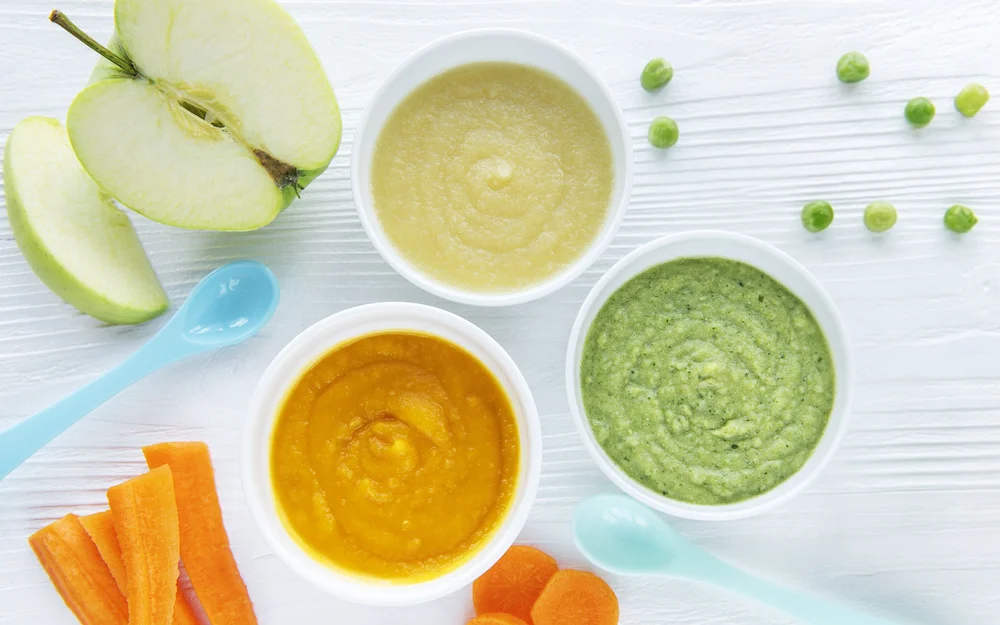
Organic Carrot and Apple Blend
Sweet carrots and apples make a perfect pairing for little mouths.
- Peel and chop one organic carrot and one organic apple.
- Steam them together until they are completely tender.
- Blend the mixture smoothly.
- Freeze the extra portions to save your future self some trouble.
Spinach, Pea, and Pear Puree
This bright green puree packs iron and great flavor into one single spoonful.
- Grab a handful of fresh organic spinach, a scoop of organic peas, and one peeled pear.
- Steam the ingredients together until the pear is soft and the spinach is wilted.
- Blend the mixture until it turns creamy and smooth.
- Pour the puree into trays for quick meal prep later in the week.
Butternut Squash and Quinoa Puree
Quinoa adds a great source of plant-based protein. This is perfect as your baby grows bigger and hungrier.
- Steam or roast organic butternut squash cubes until they mash easily with a fork.
- Cook a small batch of organic quinoa according to the package instructions.
- Blend the cooked squash and quinoa together until smooth. You might need to add extra water to get the right texture.
Making Baby Food Prep Easier and Faster
Batch-cooking homemade baby food recipes might feel like a huge chore at first. But it quickly becomes a normal part of your routine. You do not need to aim for absolute perfection. The goal is simply choosing cleaner, better ingredients whenever you possibly can.
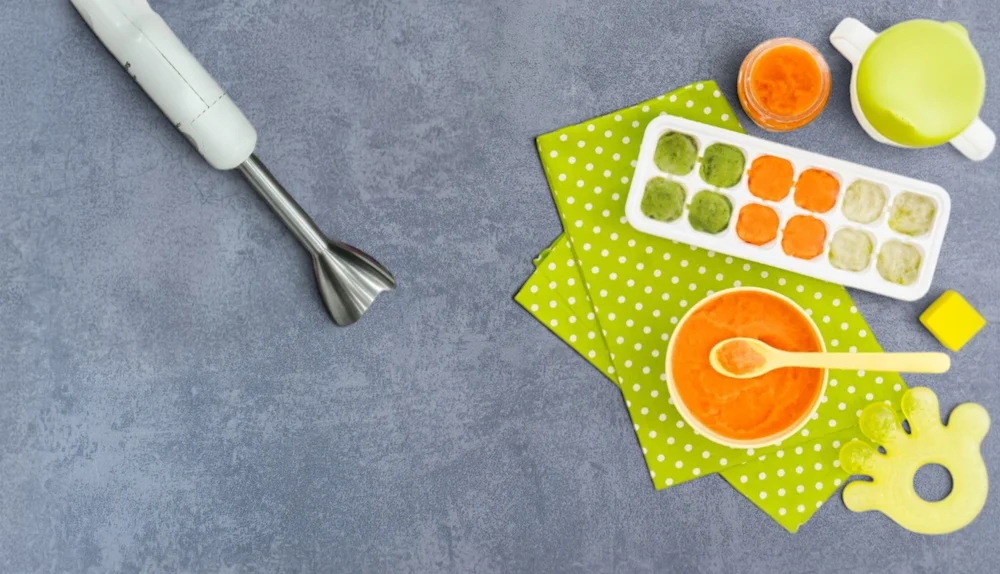
Batch cooking will save your schedule. Pick one day a week to make bigger batches of two or three different purees. Freeze the cubes and store them in labeled glass jars. When mealtime rolls around, you can just pop a cube into the fridge overnight to thaw. You can also quickly warm a frozen cube by placing it in a glass bowl set inside a larger bowl of hot water.
Combine easy foods you always have in the kitchen. Mixing sweet potatoes and peas creates a quick, nutritious, and stress-free meal.
Creating a Positive Mealtime Environment
Feeding a baby is a big learning experience. Keep the kitchen table calm and happy. Sit close to your baby, make warm eye contact, and talk to them during the meal.
Mess is normal. Babies learn by touching their food. Smearing avocado on the tray helps them understand new textures. By nine months, encourage your child to eat soft foods with their hands.
Pay attention to fullness signals. If your baby pushes the spoon away, closes their mouth, or turns their head, they are finished eating. Never force a baby to finish the bowl.
Do not worry if your baby rejects a new food. A child might refuse green beans several times before accepting the taste. Keep offering new flavors patiently.
By watching for developmental signs and choosing clean ingredients, you give your child a great start. Every spoonful matters. For more practical advice, explore our Organic Parenting section.