Organic Parenting

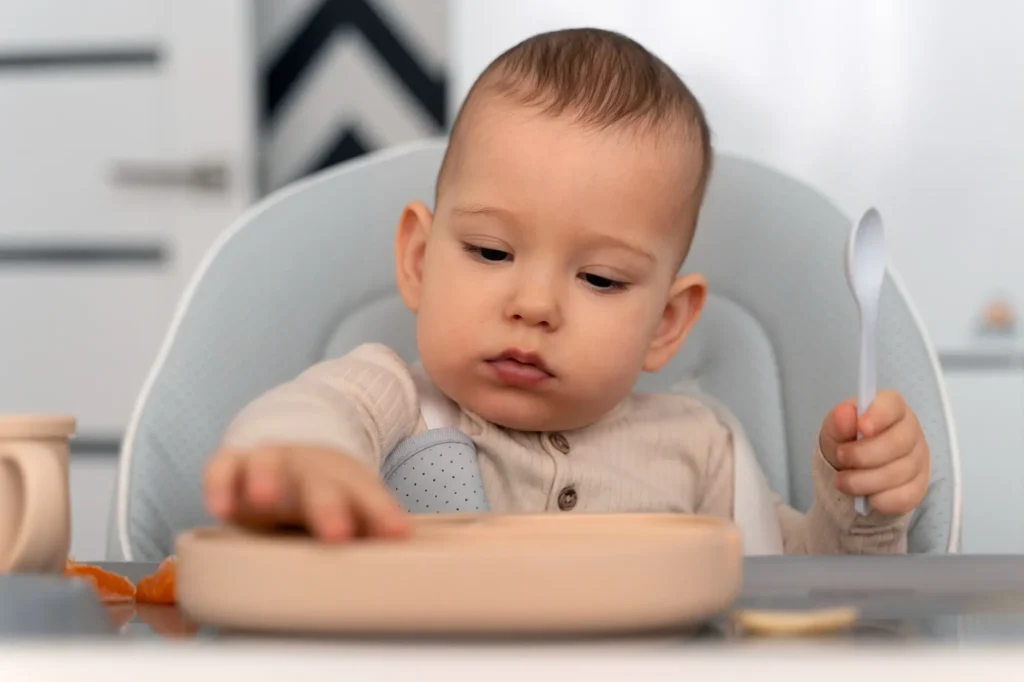
Baby sitting in high chair exploring first solid foods with spoon and plate

Stage 1 Foods for Infants: Organic and Easy Recipes

Starting solids can feel like a milestone and a mystery. That’s why getting clear on what stage 1 baby foods are and how to approach them is so helpful. You’ve just gotten into the rhythm of feeding and sleeping. Now you’re steaming squash and second-guessing whether peaches are too acidic. I felt that too. So let’s break this down in a way that’s useful, calming, and parent-tested. This article is for general information and does not replace medical advice. Always follow your pediatrician’s guidance, especially for premature babies, reflux concerns, or known allergy risk. When Should Babies Start Stage 1 Foods? Most babies are ready to start Stage 1 foods at about 6 months, once they show clear readiness signs. Some may be ready a little earlier, but age alone is not the green light. Signs Your Baby Is Ready Some babies show interest early. Some don’t until 6 months or even a little later. It’s normal. Still, always check with your pediatrician before starting solids. The AAP technical report on breastfeeding and the use of human milk supports exclusive breastfeeding for about 6 months. Breast milk or formula should stay the main source of nutrition as you begin complementary foods. Starting solids before a baby shows readiness can increase choking risk and may crowd out milk feeds. What Exactly Are Stage 1 Baby Foods? When starting with stage 1 baby foods, focus on options that are smooth, easy to digest, and one-ingredient only. Think single-ingredient foods with a soft, smooth texture. This stage is about introducing one food at a time so your baby can learn new flavors. It also makes it easier to spot a reaction. They should be: Start with 1 to 2 teaspoons once a day, keep textures smooth, and follow hunger and fullness cues. Texture-wise, it’s often compared to thin applesauce. You can thin purees further with breast milk, formula, or a bit of water depending on what your baby needs. Why Organic Matters for Stage 1 Foods Baby food is personal. And when it comes to picking between organic and non-organic, many parents ask, “Is it really worth it?” Here’s what we know: Infants and young children eat significantly more food per pound of body weight than adults. This higher intake rate increases their exposure to environmental contaminants. The U.S. Environmental Protection Agency highlights these heightened vulnerabilities, which is why choosing organic produce can help reduce their load of synthetic chemicals. Monitoring programs repeatedly find pesticide residues on many conventionally grown fruits and vegetables, including produce that ends up in baby foods. In contrast, USDA organic standards restrict most synthetic pesticides and prohibit GMOs, so many parents use organic as a practical way to reduce exposure. Beyond that, I reviewed the manufacturing data to confirm that organic brands process these purees entirely without artificial preservatives or colors. A small diet intervention study on urinary pesticide levels followed U.S. families (including children) and compared urine samples during a conventional diet phase versus an organic diet phase. After several days eating organic foods, average urinary levels of glyphosate and its main metabolite (AMPA) dropped sharply. My analysis of this study shows that while babies do not need only organic diets, your daily grocery choices drop their measurable toxin exposure fast. For a baby whose brain and organs are still developing, that kind of reduction matters. A 2024 systematic review in World Journal of Clinical Pediatrics discusses organic versus conventional infant formula and flags antibiotic-use policies as one possible difference between production standards. Direct infant outcome comparisons are still limited, so it’s best read as supporting context rather than a stand-alone conclusion. Another systematic review comparing pesticide residues in organic vs conventional foods found that organic foods, including baby foods, generally show lower pesticide-residue levels. That makes a real difference when you’re feeding a body that’s still growing and developing. What Does the USDA Organic Label Actually Mean? The term “organic” isn’t just marketing fluff. When you see a USDA Organic seal, here’s what it guarantees: USDA Organic does not mean “pesticide-free.” It means farming follows a regulated standard that restricts most synthetic pesticides and prohibits genetic engineering. For the exact labeling rules (for example, what “100% organic” means vs “organic”), see the USDA National Organic Program labeling requirements. I analyzed the federal guidelines to confirm the USDA strictly forces brands to formulate organic baby foods without GMOs, artificial preservatives, or synthetic pesticides. Products labeled “100% organic” must meet strict federal standards. If you’re new to the world of organic baby food and want a full breakdown of what’s safe, what to look for, and how to get started, check out our organic baby food basics and label-safety guide. 5 Organic Stage 1 Baby Food Recipes (Quick & Safe) These are gentle, nutrient-rich, and beginner-safe. You don’t need fancy gear or hours of prep. Most take less than 15 minutes to make. 🥣 Butternut Squash Purée A single 100-gram serving of steamed butternut squash provides 3,340 IU (167 µg RAE) of Vitamin A. According to the USDA FoodData Central database (NDB 11488), this covers well over 100% of a 7–12 month old baby’s daily needs for eye development and immune support, with only about 39 calories. It delivers excellent nutrition in a gentle, low-glycemic package. 🍐 Pear + Quinoa Purée Great for a gentle start and easy digestion. Optional (6+ months): If your baby has already tolerated pear well, you can blend in 1–2 teaspoons of fully cooked quinoa for a thicker texture. Keep it as a separate “second step” so you’re still introducing one new ingredient at a time. 🎃 Pumpkin Baby Purée Naturally sweet and high in beta-carotene. 🟢 Green Pea Purée A great source of plant-based protein and iron. 🍑 Peach Purée Perfect for summer babies. When your baby is ready to move beyond single-ingredient purees, these easy homemade baby food ideas for 6–9 months can help you plan simple combos. Organic Puree Type Caloric Density Key Micronutrient Profile Dietary Fiber Butternut Squash

Stage 1 Foods for Infants: Organic and Easy Recipes Read More »
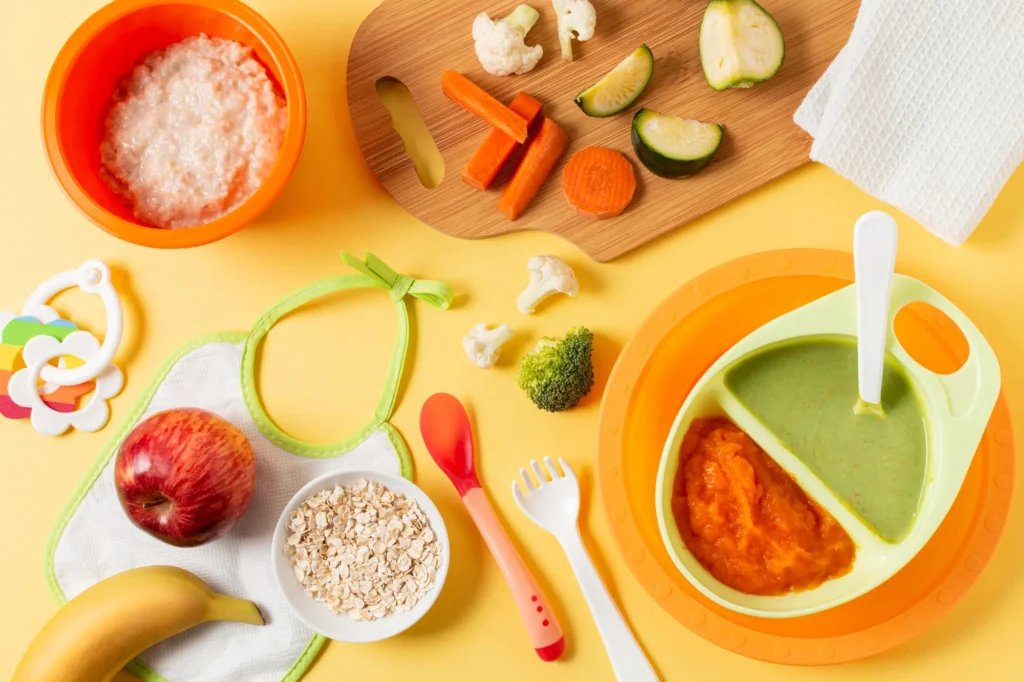
Homemade baby food in bowls with fresh fruits, vegetables, oats, and baby utensils on yellow background

Homemade Baby Food: Benefits, Recipes, & Store-Bought Comparison

Making homemade baby food feels like a comforting choice. You control the kitchen and select the ingredients. There is no need to read tiny labels. Parents simply steam, mash, and serve. As a result, many parents choose this path to find peace of mind. First, a congressional investigation detailing heavy metal levels in commercial infant products found worrying levels of lead, arsenic, and cadmium in major store-bought brands. Naturally, this news makes parents pause. It pushes many to start cooking at home. You might think that making baby food at home completely protects your child from these contaminants. In reality, the scientific data reveals a different story. Dismantling the Toxin-Free Fallacy: The Heavy Metal Paradox Many people believe that homemade baby food is naturally free from heavy metals. However, toxicological data shows this belief is wrong. A toxicological analysis of trace metals in early childhood diets tested 288 foods. The researchers also looked at over 7000 food tests from other studies. They found that 94 percent of store-bought baby foods contained heavy metals. Surprisingly, 94 percent of homemade purees and family-brand foods also contained these same metals. Ultimately, the threat does not depend on who prepares the food, but rather on the type of food you serve. Understanding Agricultural Absorption in Root Vegetables Heavy metals exist naturally in the earth, though past pesticide use and industrial waste have also left their mark in the soil. Because of this, crops inevitably absorb these metals during their growing phase. Root vegetables like sweet potatoes and carrots draw lead and cadmium directly from the dirt, while rice crops excel at extracting arsenic from flooded fields. It’s natural to assume that buying organic ingredients solves this problem, but unfortunately, it doesn’t. While organic standards strictly block synthetic pesticides, those farms still rely on the same metal-rich soil and water. The reality is that when you blend a fresh organic sweet potato at home, it carries the exact same metal load as a commercial jar. Dietary Rotation as the Primary Mitigation Strategy So, how do you actually protect your baby? The solution isn’t to completely avoid the kitchen or panic at the grocery store. Rather, the key is practicing strict dietary rotation, because serving the same food every day can concentrate specific toxins in your baby’s body. To start, you’ll want to steer clear of highly contaminated products like rice cakes, brown rice, and rice-based teething rusks. You can easily swap those out for foods naturally lower in heavy metals; bananas, apples, green beans, and peas are all excellent, low-risk choices. Thermal Degradation Kinetics: Why Fresh Preparation Matters Homemade food still holds a massive nutritional advantage. This advantage relates to heat. Factory processing requires extreme heat to keep food stable on store shelves for months or years. This intense heating destroys water-soluble vitamins. The Impact of Industrial Pasteurization on Water-Soluble Vitamins Factories pasteurize baby food at high temperatures. A study on the thermal degradation of water-soluble vitamins during industrial heat treatments analyzed this loss. The researchers measured vitamin levels using high-performance liquid chromatography, and they found that pasteurizing a baby porridge product at 85 degrees Celsius for 15 seconds destroyed 94 percent of its vitamin B12. This is a massive nutrient loss. However, when you steam vegetables briefly at home, you avoid this extreme damage. This ensures your baby receives much higher levels of active B vitamins. Arresting Ascorbic Acid Loss Through Immediate Consumption Vitamin C also degrades quickly during storage. The kinetics of ascorbic acid degradation during post-packaging storage follow a first-order chemical model. This mathematical equation shows this loss: C(t) = C0 .e-kt In this formula, C(t) is the vitamin concentration over time, while C0 is the starting concentration. The variable t represents the storage duration, and k is the reaction rate constant. When baby food sits in a warehouse for months, the variable t grows, which causes the vitamin C level to drop significantly. By contrast, preparing purees at home and serving them immediately keeps t at zero. This simple step preserves the active vitamin C for your baby. Let’s present a comparative analysis of these two preparation paths. Nutritional and Chemical Parameter Commercial Manufacturing Profile Domestic Preparation Profile Clinical Evidence Source Trace Metal Contamination Rate 94 percent of tested samples contained heavy metals 94 percent of tested samples contained heavy metals Healthy Babies Bright Futures Study Primary Contamination Vector Soil and water absorption during crop growth Soil and water absorption during crop growth Heavy metals in baby food Cobalamin (Vitamin B12) Loss Decreases by 94 percent during pasteurization High retention during brief home steaming Industrial Heat Treatment Study Ascorbic Acid (Vitamin C) Loss Follows a kinetic decay model during long storage High retention when served immediately Vitamin C Kinetics Study Chemical Leaching Risk High risk from plastic packaging and pouches Low risk when using glass containers Food Packaging Research In addition, to plan your meals safely, you can use this risk-level table for common foods. Contamination Risk Category Specific Food Items from Testing Recommended Action Severe Risk Level Rice cakes, brown rice, rice puffs, teething rusks Avoid these items completely Moderate Risk Level Sweet potatoes, carrots, teething crackers, oat cereal Rotate these foods and peel them thoroughly Low Risk Level Bananas, apples, green beans, peas, butternut squash Serve these foods freely as dietary bases Navigating Storage Safety and Chemical Migration Making homemade baby food at home means you must store it safely. While, store-bought products use plastic pouches or jars, these materials carry hidden risks. Preventing Endocrine Disruption from Polycarbonate Containers A study on clinical pediatric findings on bisphenol A leaching from polycarbonate containers warns parents about plastic storage. Bisphenol A (BPA) can migrate from hard plastic into baby food. This chemical acts as an endocrine disruptor. Even plastics labeled as BPA-free can leach other dangerous compounds. Studies on plastic baby food pouches found non-intentionally added substances migrating into the food. To keep your homemade baby food safe, use tempered glass containers or food-grade silicone trays. These inert materials prevent

Homemade Baby Food: Benefits, Recipes, & Store-Bought Comparison Read More »

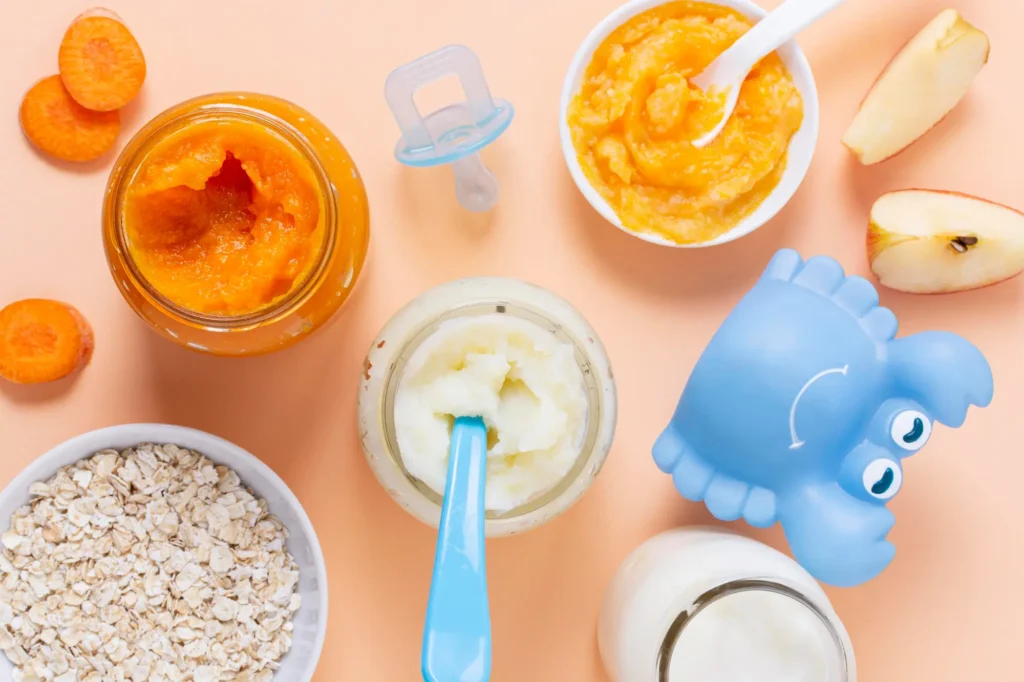
Homemade Organic Baby Food – Pureed Carrots, Apples, and Oats in Glass Jars

Organic Baby Food 101: What Every Parent Should Know

Feeding your baby brings up a lot of questions. You face many choices in the grocery aisle. Adding organic baby food to the mix creates another layer of decisions. What is real, and what is just marketing? Here is a practical guide to cut through the noise. You deserve to feel good about what goes into that tiny spoon. We will look at exact data, cost breakdowns, and clear steps so you can make the best choices. You can also explore more practical, science-backed guides in our Organic Parenting hub. What Is Organic Baby Food? Organic tells you exactly what is in the jar. Farmers grow organic ingredients without synthetic pesticides. They skip chemical fertilizers and refuse to use genetically modified organisms (GMOs). When you see the USDA Organic seal or verify the strict European Union organic farming standards, you know the entire process met high legal requirements. Both regions enforce tight rules. The food traveled from soil to shelf without sketchy shortcuts. Producers cannot use growth hormones or antibiotics. Do not get mixed up by clever marketing. “Natural” does not mean “Organic.” Companies use the word natural to mean almost anything, while organic requires strict, verified rules. Why Does Organic Matter for Babies? Babies eat a large amount of food for their body weight. Their tiny bodies are still growing, making them highly sensitive to chemicals. Conventional produce often carries pesticide residues. Research shows that switching a child to an organic diet drops their urinary pesticide levels dramatically in just a few days. A baby processes these chemicals differently than an adult. This reduction helps protect their developing brains . The American Academy of Pediatrics states that organic foods cut down exposure to these residues. Buying organic also lowers the risk of antibiotic-resistant bacteria. I track pediatric nutrition data closely, and research directly links pesticide exposure to long-term health issues. Parents also worry about natural soil contaminants. The U.S. Food and Drug Administration actively monitors heavy metals like lead and arsenic in processed baby foods . Serving a variety of clean, organic produce helps you avoid concentrating these specific metals in your baby’s diet. Do not expect organic food to automatically pack more vitamins. The nutrient levels often match conventional foods. Buying organic is really about cutting out extra chemicals. Store-Bought vs. Homemade Organic Baby Food Feeding Method Avg. Cost Per Ounce Prep Time (Per Meal) Nutritional Retention Best For Store-Bought Jars $0.30 to $0.55 0 Minutes Moderate (Heated for shelf life) Travel and busy days Store-Bought Pouches $0.60 to $1.20 0 Minutes Moderate Quick snacks on the go Homemade (Fresh) $0.08 to $0.18 10 to 15 Minutes Maximum Daily meals at home Homemade (Batch Frozen) $0.07 to $0.13 2 Minutes (Reheating) High (Locks in vitamins) Budget-friendly routines Cost estimates are approximate and based on average U.S. retail prices in 2026. Actual costs may vary by location, season, and brand. Store-Bought Organic Baby Food Just look for the USDA Organic seal or the European green leaf logo. Trusted American options include Earth’s Best, Happy Baby Organics, Once Upon a Farm, and Little Spoon. If you shop in Europe or look for imported options, choose top organic brands like HiPP Organic and Ella’s Kitchen. These companies follow the exact same high standards to keep chemicals out of your baby’s food. Keep your choices simple. If the front label says “organic carrots,” the back label should just list carrots and water. Homemade Organic Baby Food Making baby food at home means you control exactly what goes into every bite. You pick the fresh produce and leave out the weird extras. You can easily steam, bake, or roast soft fruits and vegetables. Next, blend them with a little breast milk, formula, or water. Freeze the puree in silicone ice cube trays. One cube equals one small meal. You can easily pop a cube out, warm it up, and serve it. You just need a blender and a few clean containers. Try blending apples with carrots or peas with pears as your baby grows. How to Save Money on Organic Baby Food Buying organic food does not have to break your grocery budget. You can find step-by-step instructions on preparing and safely storing your own purees at home to keep your grocery bills low. When Should You Start Organic Baby Food? Most babies are ready for solid food between 4 and 6 months. Every child follows their own timeline. Look for these signs that they are ready: Always run this by your pediatrician first. When you start feeding them solids, go very slowly. The Centers for Disease Control and Prevention recommends introducing one new food at a time. Wait three to five days before trying another new flavor to monitor for allergic reactions. If your baby shows these signs, you can start offering simple, single-ingredient vegetable and fruit mashes to introduce new flavors safely. As they develop better swallowing skills, you can graduate to slightly thicker textures and nutrient-dense meal combinations. How to Read Baby Food Labels Brands use the front of the package for bright marketing, but you will also spot official organic seals right near the bottom edge or back of the pack. You must still flip the pouch over. The back label shows you the exact ingredient list without any distractions. Long ingredient lists usually mean heavy processing. Clean food is always best. What Foods Should You Always Buy Organic? Some produce soaks up chemicals much faster than others. Buy these specific foods organic: Real Parent Questions (and Quick Answers) What if I cannot afford to buy all organic food? Look at the EWG Dirty Dozen list to see the worst offenders for pesticide residue. If buying fresh organic produce stretches your budget, hit the frozen aisle. You get the exact same nutrients for fewer dollars. Can I really make baby food at home? Yes, you definitely can. Steam a batch of fresh vegetables, blend them, and freeze the food in ice cube trays. You just need a standard

Organic Baby Food 101: What Every Parent Should Know Read More »

Scroll to Top