
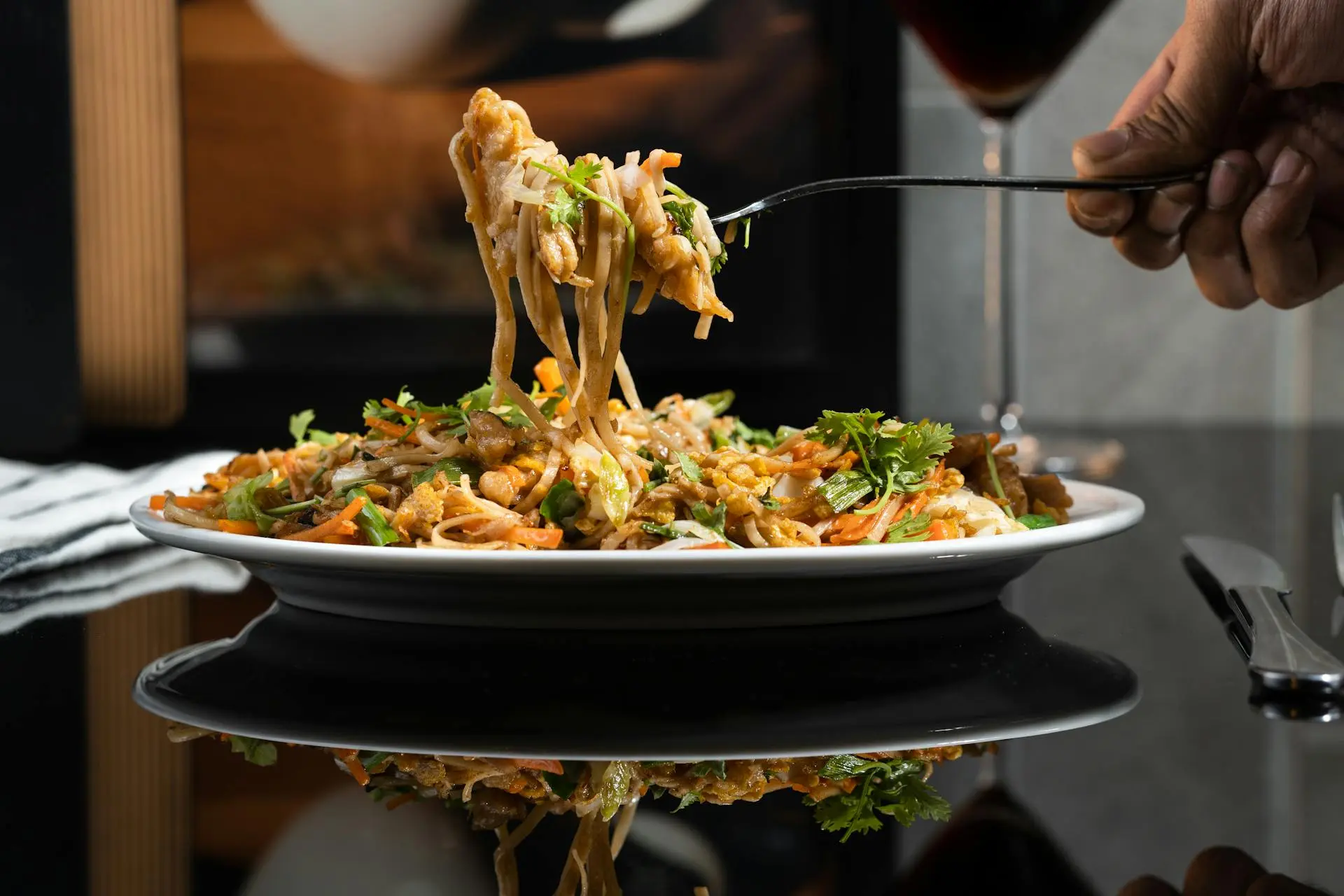
Some pasta meals leave you hungry again fast. That usually happens when the plate has lots of noodles and not much protein or fiber.
High protein pasta can help. It uses ingredients like chickpeas, lentils, peas, edamame, or quinoa blends. That often changes the nutrition label in a good way.
In this post, you will learn what high protein pasta is, which types cook well, and easy clean recipes you can use on busy days.
Quick note before we start. Brands vary a lot. Always check the serving size on the label so you compare fairly.
What Is High Protein Pasta?
High protein pasta uses ingredients like lentils, chickpeas, edamame, or quinoa blends instead of only refined wheat. Some brands also add pea protein or whey to raise the protein on the label.
Many high protein pastas list more protein and fiber than standard pasta. The exact numbers change by brand and serving size, so compare labels using the same dry portion.
When you get more protein and fiber in the meal, many people feel fuller and steadier after eating. You still need a balanced plate. Pasta alone will not do the job.
How It’s Different from Regular Pasta
Traditional pasta usually uses wheat semolina. It can still fit into a healthy diet. The difference is that many high protein pastas start with legumes or soy, so they bring more protein and fiber by default.
That often changes how full you feel after the meal. It also changes texture, so cooking time matters.
Many high protein pastas are gluten free because they use legumes or soy. Still, check the label. If you need strict gluten free, look for a clear gluten-free claim and certification.
Health Benefits of High Protein Pasta
When you add protein to a meal, many people feel steadier after eating and snack less later. High protein pasta can make that easier because the pasta itself brings more protein than regular noodles. You still get the best result when you add vegetables and a protein topping.
Keeps You Fuller for Longer
Protein tends to keep you full longer than a low-protein meal. You can test this yourself.
Try two bowls on different days. First, pasta with sauce only. Second, pasta with vegetables and a protein source like chicken, tofu, lentils, or a yogurt-based sauce. Most people notice fewer cravings later with the second bowl.
Supports Muscle Recovery
Protein isn’t just about gym goals. It’s essential for cellular repair, immune health, and hormone balance. A review from the Journal of the International Society of Sports Nutrition discusses protein intake patterns for people who train. Many people do well when they spread protein across meals instead of packing most of it into one sitting.
Naturally High in Fiber and Nutrients
Lentils, quinoa, and edamame bring more than protein. They also add fiber and useful minerals. You will often see iron, magnesium, and B vitamins show up across these foods, though exact amounts depend on the brand and portion size.
If you want numbers, trust the label more than the marketing on the front of the box.
Best Types of High Protein Pasta to Try
Some boxes look healthy but do not offer much protein or fiber. These options usually perform well in real kitchens and also give better nutrition for most people.
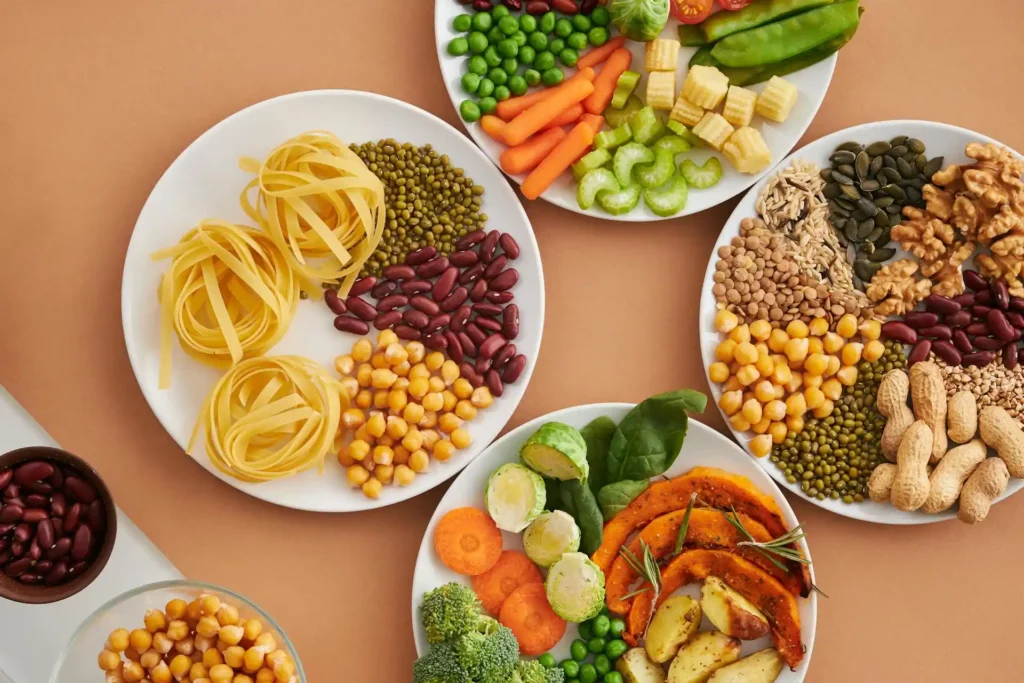
Chickpea Pasta
Many chickpea pastas list high protein and solid fiber, but the exact numbers change by brand. Check the nutrition label for the dry serving size. Chickpea pasta also has a mild nutty taste, so it works well with tomato sauces and roasted vegetables.
Lentil Pasta
Red or green lentil pasta holds its shape well and has a mild earthy taste. It’s ideal for cream sauces or baked casseroles since it doesn’t go mushy as easily.
Quinoa Pasta
Quinoa is known for having a strong amino acid mix. Quinoa-based pastas can help you add variety, but blends differ. Some products mix quinoa with rice or corn, so check ingredients and the nutrition label.
Edamame Noodles
Some edamame or soybean noodles list very high protein on the label. Values vary by brand, so check the Nutrition Facts panel. These noodles also taste stronger, so they pair well with garlic, sesame, ginger, and chili.
Clean, High Protein Pasta Recipes to Try
Here are a few easy combos that feel like comfort food but still give you a balanced plate.
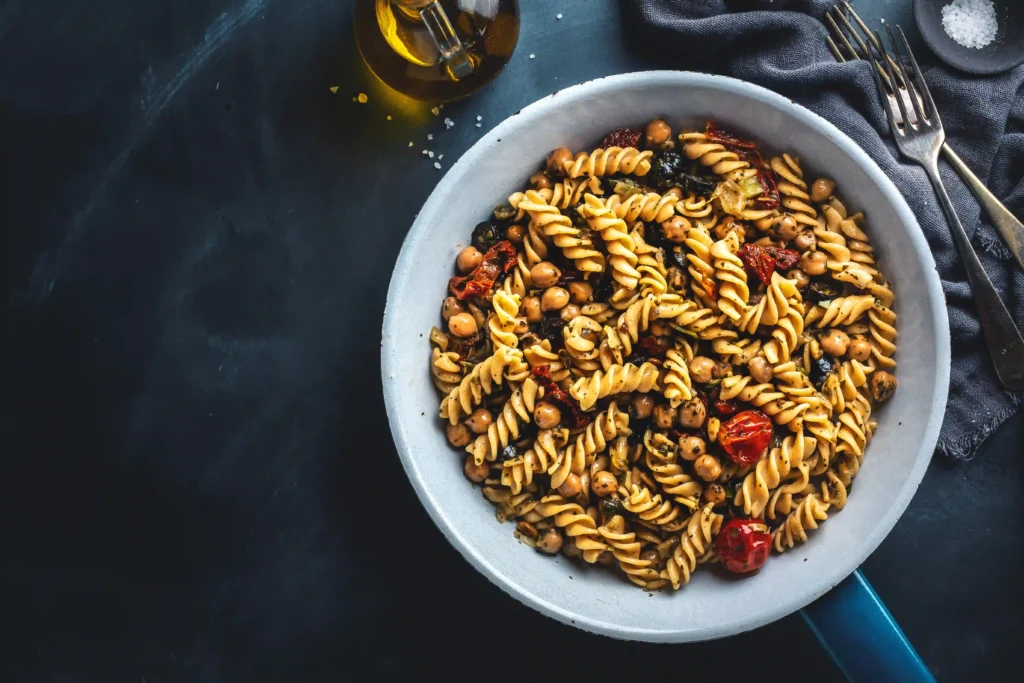
Mediterranean Chickpea Pasta Bowl
Toss cooked chickpea pasta with cherry tomatoes, olives, red onion, cucumbers, and a splash of lemon-olive oil dressing. Add crumbled feta for extra flavor and calcium.
Bonus Tip: Sprinkle with oregano and fresh parsley for an antioxidant kick.
Edamame Noodle Stir-Fry
Sauté garlic, broccoli, bell peppers, and carrots in sesame oil. Toss in cooked edamame noodles and a dash of tamari. Top with sesame seeds and green onions.
Flavor Boost: Add fresh ginger or a spoonful of chili paste for heat.
Creamy Vegan Lentil Pasta
Blend soaked cashews with garlic, lemon juice, and nutritional yeast to make a creamy sauce. Toss it with red lentil pasta and roasted zucchini.
Keep portions realistic and add vegetables generously. That’s what makes it filling without needing heavy cream.
Cottage Cheese Protein Pasta Bake
Layer cooked whole grain or legume pasta with seasoned cottage cheese, sautéed spinach, and a light tomato sauce. Bake until golden and bubbling.
Cottage cheese gives this bake more protein without needing heavy cream or processed cheese. It also makes the dish more filling, so you can keep portions sensible and still feel satisfied.
If you’re looking for more creative ways to use cottage cheese in clean, high-protein snacks, try these crispy cottage cheese chips. They’re simple, oven-baked, and a great savory alternative to store-bought crackers.
Avocado Protein Pasta with Nutritional Yeast
Mash ripe avocado with lemon juice, garlic, and a splash of olive oil. Toss with quinoa pasta and finish with a generous sprinkle of nutritional yeast.
This quick sauce gives you healthy fats, plant protein, and a cheesy flavor — without any dairy. It’s perfect for busy nights or when you need something light but satisfying.
If you love this combo, you’ll probably enjoy our Avocado & Quinoa Salad Recipe too. It’s another clean, protein-rich meal idea that uses the same powerhouse ingredients in a fresh, no-cook way.
How to Boost Protein in Any Pasta Dish
You do not need specialty pasta to raise protein. What you add matters just as much as the noodles. Focus on the sauce, the toppings, and the vegetables, and you can turn a basic bowl into a meal that keeps you full longer.
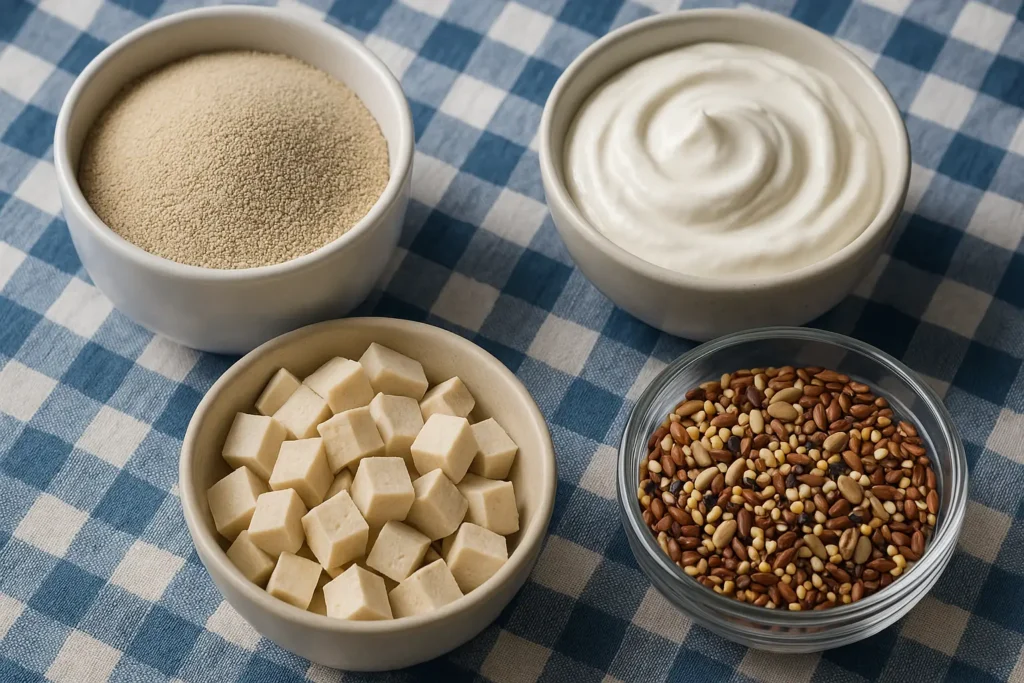
Add Protein-Rich Sauces (Greek Yogurt, Cottage Cheese, Silken Tofu)
Want a creamy sauce without heavy cream? Try Greek yogurt, cottage cheese, or silken tofu. Each one blends well and adds protein, but the exact amount depends on the brand and serving size, so check the label. If you feel sensitive to dairy or beans, start with a small amount and see how your stomach reacts.
Top with Nuts, Seeds, and Nutritional Yeast
A small topping can change the whole meal. Hemp seeds, chopped almonds, or ground flax can add crunch plus a bit more protein and healthy fat. Nutritional yeast adds a savory, cheesy taste without dairy. Use 1 to 2 tablespoons if you like the flavor, and check the label if you want the exact protein number.
Use Veggies That Offer Extra Protein (Broccoli, Peas, Spinach)
Some vegetables add more than color. Peas and broccoli give a bit more protein than most veggies, and spinach adds iron and volume without changing the flavor much. Stir them into the sauce or add them near the end of cooking so they stay bright and do not turn mushy.
Clean Eating Tips for Cooking High Protein Pasta
These swaps help you keep the meal clean and still enjoy the taste.
- Use organic ingredients whenever possible
- Skip pre-made sauces that contain added sugar or thickeners
- Add colorful veggies for fiber and phytonutrients
- Top with nutritional yeast, herbs, or seeds instead of cheese every time
For even more inflammation-fighting flavor, try sipping a warm cup of turmeric ginger tea after your meal.
Can High Protein Pasta Help with Weight Management?
It can help, especially when you keep portions reasonable and build a balanced plate.
Higher-protein meals often help you feel fuller. Research links protein intake with appetite signals, but your results still depend on your total diet and portion size.
In fact, a detailed scientific review on high-protein diets and metabolism explains how these meals promote satiety, influence hormone signaling, and may contribute to fat loss — though they also note potential caveats like excess intake or imbalanced eating patterns.
Looking for more meal inspiration designed around clean weight support? This Organic Weight Loss Diet guide offers sustainable, no-fad advice for building meals that nourish and energize.
If you have kidney disease or another medical condition, ask a qualified clinician before you raise protein intake.
What to Watch Out For (Common Mistakes)
Not every high-protein pasta is a slam dunk. Here’s what to avoid:
- Overcooking: These pastas can turn mushy quickly. Start with 1–2 minutes less than the package suggests and taste-test as you go.
- Added Fillers or Gums: Some store-bought brands use unnecessary additives for texture. Always read labels for clean, minimal ingredients.
- Ignoring Portion Size: Protein or not, too much pasta can still derail your goals. Stick to 1–1.5 cups cooked per serving — and bulk it up with veggies or lean protein.
Final Thoughts: Pasta That Fuels, Not Fills
You don’t have to quit pasta to eat clean. Pick a higher-protein option, cook it properly, and build the plate with vegetables and a protein source.
High-protein pasta delivers the comfort of classic noodles, with the benefits of better blood sugar balance, satiety, and clean energy. Whether you’re cooking for yourself, feeding kids, or meal-prepping for the week, it’s an easy upgrade that can support your health goals without losing flavor.
Use the label, cook it right, and build a balanced plate. That’s the difference between a pasta meal that feels heavy and one that actually supports your goals.