
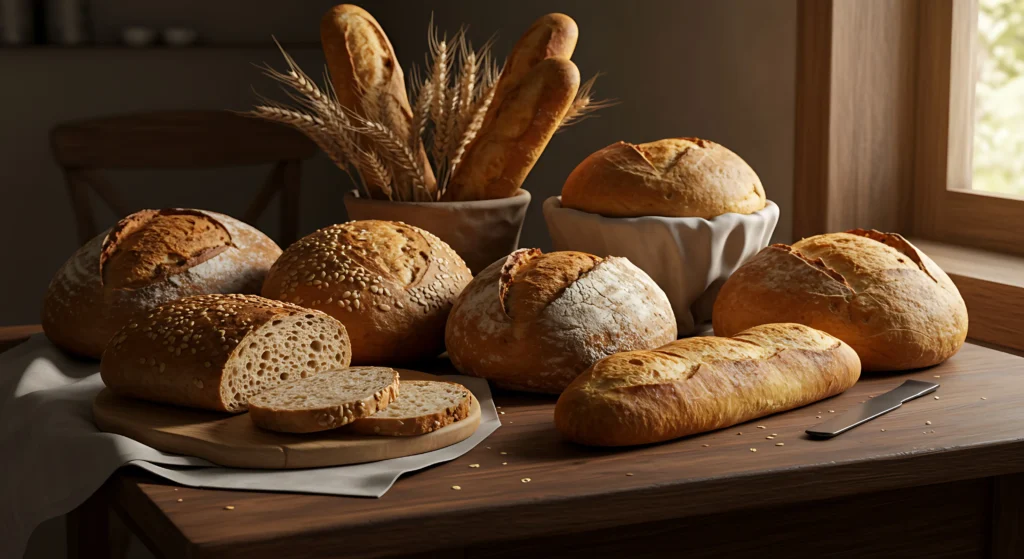
Healthy Bread Recipes: Soft, Easy & Clean Bakes
Healthy bread recipes can be soft and easy without turning into a “health” project. The real advantage of baking at home is control. You decide the flour, the fat, the salt, and how sweet it gets. Packaged bread is not always bad. Still, many loaves stay soft for weeks because they lean on refined flour, added sugar, and processing helpers. If you want a cleaner label, homemade is the simplest route. This guide breaks down what “healthy” usually means in bread, which ingredients matter most, and five beginner-friendly recipes you can slice and repeat. What Makes Bread “Healthy”? (And What to Watch Out For) The healthiest breads share three things: whole food ingredients, fiber, and minimal processing. That does not mean flavorless or dry. Get those three right and you will have healthy bread recipes that stay soft and still taste like bread. Unfortunately, most commercial breads fall short. They often contain: Want better? Swap in nutrient-rich flours, whole grains, seeds, and natural fermentation. Here’s how: Ingredients That Belong in Healthy Bread Recipes Looking to add depth of flavor without extra sugar? Try warming spices like cinnamon, cumin, or even turmeric. We covered these versatile add-ins in our guide to clean organic spices for baking. Many work well in both savory and sweet bread recipes. Ingredients You Might Want to Avoid Not all ingredients deserve a spot in your bread. To compare flour nutrition across brands and types, use the USDA FoodData Central flour database. Top Healthy Bread Recipes (Soft, Easy & Nutrient-Rich) You don’t need pro baking skills to make good bread at home. Start with clean ingredients, follow a simple method, and aim for a soft crumb. These recipes are not sourdough or crusty artisan loaves. They are beginner-friendly breads you can slice for breakfast or snacks. Each one skips refined sugar and long additive lists. 1. Whole Grain Banana Bread (Naturally Sweetened) Soft, sweet, and made with real ingredients, with no added sugar and no empty carbs. This one gets its flavor and texture straight from the bananas and oats. It’s a clean bake that holds together and satisfies. What You’ll Need: How to Make It: Mash the bananas in a mixing bowl until they’re completely smooth, with no chunks. Add the oil, flax, cinnamon, baking powder, and salt. Stir in the oat flour last. The batter should feel thick, almost like a scoopable paste. Line a loaf pan with parchment. Press the mixture in and smooth the top. Bake at 350°F (175°C) for 35 to 40 minutes, or until a toothpick in the center comes out mostly clean. Let it cool in the pan. It firms up as it rests. Why It Works: As we explained in these clean pasta meals that balance protein and complex carbs, the goal is to steady blood sugar and avoid post-meal crashes. 2. No-Knead Spelt Bread Spelt is an older type of wheat, and it bakes into a hearty loaf with a mild, nutty taste. Some people simply prefer it over white flour. Spelt still contains gluten, so it is not suitable for celiac disease or a true wheat allergy. What Goes In: What to Do: Toss everything into a big bowl and stir it around until it all comes together. No kneading here. The dough should look rough and feel sticky, which is fine. Cover it and leave it alone on the counter for 10 to 12 hours. It’ll rise on its own. Once it’s ready, get your oven to 450°F. Heat up a Dutch oven inside for about 30 minutes. Then drop the dough in carefully, cover it, and bake for 30 minutes. Take the lid off and let it go for another 10 or so to brown the top. What You Get: A crusty, golden outside and a soft, chewy middle. No kneading. No mixer. Just flour, salt, water, and time doing what they do best. 3. Gluten-Free Almond Flour Bread This one doesn’t try to mimic white bread, and that’s part of the charm. It’s got a dense, soft middle, slices well, and holds together when toasted. Plus, it’s quick. What You’ll Need: How to Make It: Crack the eggs into a mixing bowl and give them a quick whisk. Add the vinegar and salt. They help with texture and flavor. Stir in almond flour and baking soda until you’ve got a thick, spoonable batter. If you’re using chia or flax, fold that in at the end. Baking Time: The top should look set, and the center should give just a little when pressed, with no wobble. Let it cool before slicing. Almond flour firms up best once it rests. Why It Works: You’ll get a clean loaf full of healthy fats, light protein, and that mild, nutty flavor almond flour is known for. It’s a solid base for both sweet and savory. Spread on almond butter, dip it in olive oil, or just toast it plain. 4. Oatmeal Honey Bread (Low Sugar, High Fiber) It’s the kind of bread you keep coming back to. Mildly sweet, soft in the middle, and firm enough to hold up in a toaster. You can eat it plain or dress it up, and it won’t fall apart. What You’ll Need: How to Make It: Stir the oats, flour, yeast, and salt in a large bowl. Add the water, honey, and oil. Mix until the dough holds together. You don’t need to knead it. Just combine it well enough so there aren’t dry patches. Let the dough rest, covered, for about an hour. It’ll puff up a bit. After that, shape it and drop it into a loaf tin. Bake at 375°F (190°C) for about 30 minutes. You’ll know it’s done when the top turns golden and it sounds hollow if you tap it lightly. Why It Matters: Oats contain beta-glucan, a soluble fiber linked with LDL cholesterol improvements when intake is consistent. Whole wheat adds extra fiber and helps the loaf feel more filling. If you want the
Healthy Bread Recipes: Soft, Easy & Clean Bakes Read More »